

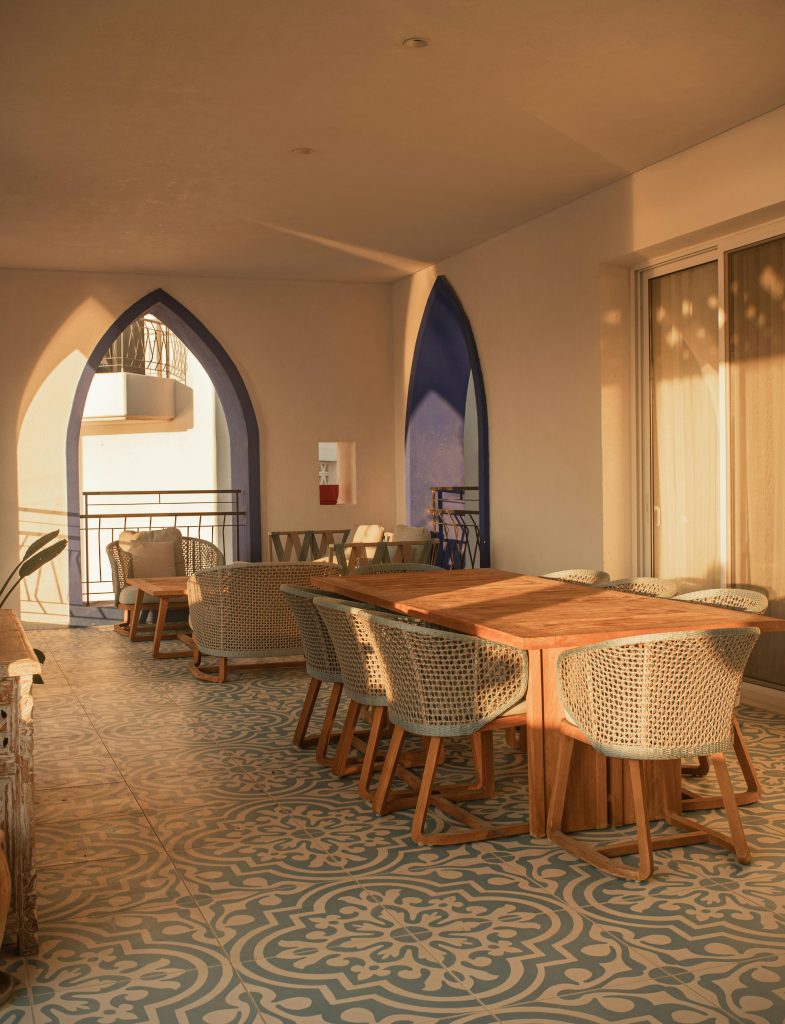
Five fundamentals turn a Cyprus rental into a high-performing asset: location and access, layout and capacity, condition and finish, listing and pricing strategy, and operational consistency. The first three are properties of the asset itself; the last two are properties of how the asset is run. A property that scores well across all five compounds returns year over year. A property that scores poorly on any one drags the whole picture down.
This article is a five-factor framework. Owners can run it on their own property and find the gaps.
1. Location and Access
Location is the factor an owner cannot change after purchase, which is exactly why it deserves first place in any honest analysis. Cyprus tourism is concentrated, and proximity to the gravity points is what determines whether a property can fill its calendar.
Proximity to airport, beach, and city centre
The strongest locations sit within 15 minutes of at least one of three things: a Cyprus international airport (Larnaca or Paphos), a working seafront, or a city-centre tourist district. Larnaca seafront properties often hit two of three (airport and beach). Limassol tourist-strip apartments hit beach and centre. Paphos harbour-area units hit beach and centre. Properties that hit none of the three rarely justify the operational load of short-term rental, regardless of what the listing photos look like.
Walk-to-amenities scoring
Beyond the headline three, walk-to-amenities (restaurants, cafes, supermarkets, pharmacies) materially affects guest reviews and repeat-booking rates. A property fifteen minutes’ walk from the nearest meaningful amenity rents at lower rates and produces more guest friction than a property five minutes from the same set. Walkability is not a luxury concern; it is a measurable revenue lever.
The interaction between location and market is also worth reading separately. We cover where Larnaca property fits the high-performance profile in a sister post, and the relationship between price and access is sharper there than in the national averages.
2. Layout and Capacity
Bedroom mix and effective sleeping capacity
The Cyprus tourism guest profile skews heavily to couples and small families. The strongest layouts are one-bedroom apartments that comfortably sleep two to four (with a sofa bed in the living area), and two-bedroom apartments that sleep four to six. Three-bedroom layouts can perform but typically have a smaller addressable market in short-term, and often pencil out better as long-term lets.
Effective sleeping capacity is what the property can credibly market, not the maximum it can fit. A studio that “sleeps four” with two on a pull-out and two on a couch will rent and review badly; the same property marketed honestly as “sleeps two” rents and reviews well.
Living spaces, balconies, outdoor area
Outdoor space is a meaningful differentiator on the Cyprus market. A balcony with a sea view, a small terrace, or any outdoor area at all materially lifts both nightly rate and review scores compared to an otherwise-identical unit without one. Cyprus weather makes outdoor space usable for nine months of the year, and guests notice.
3. Condition and Finish
The 80/20 of finish work that moves the needle
Owners often overspend on the wrong finish work and underspend on the right finish work. The 80/20 of high-impact, low-cost improvements: matched, modern bedding and towels (replaced annually); bright daytime LED lighting in living spaces; a working, current kitchen with proper utensils; a usable workspace with reliable wifi; air-conditioning that actually cools.
The wrong-priority spends: marble that does not photograph differently from porcelain, designer furniture that gets ruined by short-stay turnover, and decorative finishes that do not appear in the listing photos.
Renovation versus refresh
A refresh (paint, lighting, soft furnishings, photography) typically costs in the EUR 3,000 to 8,000 band on a one-bedroom apartment and lifts visible quality measurably. A full renovation (kitchen, bathroom, flooring, layout changes) costs many times more and is justified only when the underlying property has structural or condition issues that a refresh cannot solve. The honest question owners should ask is whether the property’s ceiling is being held back by finish or by something deeper.
Design and renovation that drives rental performance lives at the intersection of these decisions, and modelling the return on each spend before committing capital is the difference between a renovation that compounds and one that does not.
4. Listing and Pricing Strategy
A property scoring well on the first three fundamentals can still under-perform if the listing and pricing strategy is poor. The factors:
- Photography: professional, current, seasonal. Updated at least annually. Lead image chosen for the platform’s thumbnail crop.
- Description: accurate, scannable, written for the search and the algorithm rather than for the owner’s pride.
- Pricing: dynamic, run daily, responsive to demand and competitor activity. Static pricing is one of the most expensive operational mistakes Cyprus owners make.
- Channel mix: at minimum Booking.com and Airbnb; ideally also direct bookings via the property’s own page and one or two specialist channels.
- Review management: prompt, professional responses to every review, including the difficult ones.
The work is not occasional. It is monthly, sometimes weekly. The property managed end-to-end runs this as a system; the property managed in spare time often misses two or three of the five.
5. Operational Consistency
The factor that separates properties that perform once from properties that perform every year. Operational consistency means same-day turnovers happen on time, every time. Cleaning hits the standard, every time. Maintenance is preventive, not reactive. Guest communication is responsive, professional, multilingual where the market demands it. Reporting is monthly and complete.
This is the substance of the operational consistency that high-performing rentals need. It is also the layer that compounds: a property run consistently for three years builds a review base, a repeat-booking base, and a calendar shape that a newer or less-disciplined property cannot match. Performance is path-dependent. The five years before this year matter to the result this year.
Putting It Together: A Quick Scoring Framework
Owners can score their own property on the five factors, one to five on each:
- Location and access: how close to airport, seafront, or city centre? How walkable?
- Layout and capacity: does the bedroom mix match the dominant guest profile? Is there outdoor space?
- Condition and finish: is the unit photo-ready, with the high-leverage finish elements current?
- Listing and pricing strategy: are listings refreshed, prices dynamic, channels diversified?
- Operational consistency: are turnovers, cleaning, and maintenance run as systems?
A property scoring four or five across the board is a high-performing asset. A property scoring one or two on any factor has a specific, addressable problem; the framework points at which one. Investor-side appraisal of rental potential runs a deeper version of this scoring on the property’s actual numbers and market position.
Frequently Asked Questions
Score the property against the five fundamentals: location, layout, condition, listing strategy, and operational consistency. A property within 15 minutes of an airport, seafront, or city centre, with a guest-friendly layout (one or two-bedroom, sleeps four to six), good condition, professional photography and dynamic pricing, and consistent operations should score well. A property failing on location may struggle regardless of effort on the other four. The framework is honest about the ceiling each property has before any operational work begins.
Sometimes, but the ceiling is lower and the operational effort required to reach it is higher. A poorly located property can perform respectably as a long-term let or as a niche short-term rental targeting a specific guest type (workers on contract, university tenants, off-season specialists). What it usually cannot do is compete for mainstream tourism short-term demand, because the underlying location-driven traffic is not there. Honest expectation-setting matters more than effort on this question.
A full refresh (paint, lighting, soft furnishings, photography) on a tired one-bedroom apartment can lift achieved nightly rates by 15% to 30% and visible review scores meaningfully. A full structural renovation on a property with deeper condition issues can lift performance more, but at a much higher capital cost and longer payback period. The right question is whether the gap between current performance and ceiling is a refresh problem or a structural problem; the answer determines the spend.
Static pricing is the most common operational issue. Owners set a nightly rate and leave it unchanged through the seasonal curve, leaving meaningful revenue uncaptured in peak months and over-pricing into shoulder months. The second most common is listing neglect: photographs that are two or three years old, descriptions that have not been updated, and review responses that are absent. Both are fixable inside a month with the right operational discipline.
If you would like a structured read on where your property sits across the five fundamentals, let our team review your property’s potential and we will run the framework against your actuals.
